The Generative AI Hypebeast

Hypebeast generally refers to a person who is devoted to acquiring fashionable items, especially clothing and shoes. - Definition from Merriam-Webster dictionary
Change doesn't occur the way we want it to.
In 1991 when I started to DJ, I had all the gear most people possessed to perform. Two turntables, a mixer and plenty of vinyl. During that time everyone talked about how CDs would be the preferred future format for DJs to use and they were correct.
Until they weren't.
DJs adopted a new technology around the year 2002 called Serato, which mimicked playing vinyl from what looked like records on turntables really pulling from mp3s on the hard drive of a computer laptop. Meanwhile, Pioneer produced the CDJ, which became a new piece of gear that started to gain in adoption of DJs actually using CDs to spin. And yet, even now, in 2025 as I write this, vinyl is prevalent in the industry.
So what does this have to do with generative AI?
Just because we have a bunch of tech nerds shouting into the void that generative AI will only get better and that you better adopt it or you'll be poor, the reality is not many people are doing anything super creative with it yet.
Or maybe ever.
Those aren't my words, but a direct quote from Daron Acemoglu, Nobel Prize-winning economist and professor of economics at the Massachusetts Institute of Technology.
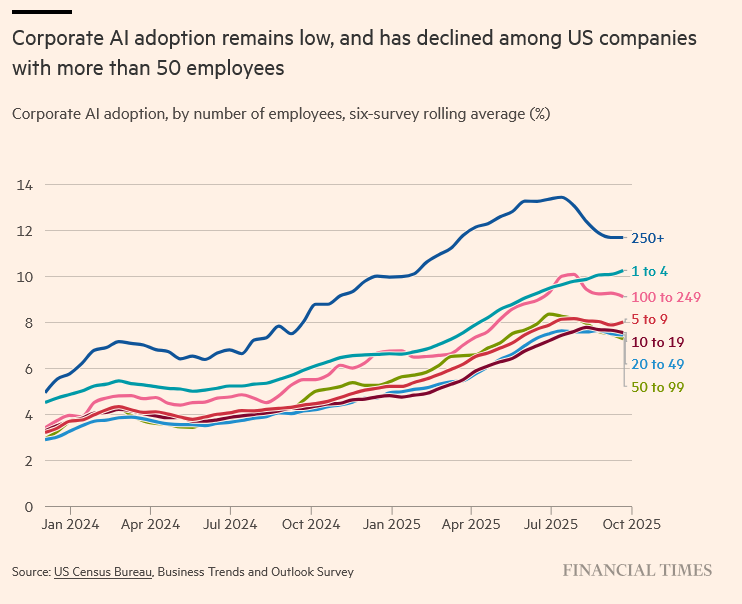
A recent report by The Financial Times notes that corporate AI adoption remains low and the era of slop may get them to pay even less attention to the hype. Even worse, many companies larger than 50 employees, the kind with larger budgets, have paused or given up on generative AI.
But what about Sora 2???
Let's not confuse unique, innovative or original ideas with what I'll dub "bootlegs." Most of the creative output from Sora 2 in its first three days of release were based on existing IP. Remakes and remixes and mashups of Michael Jackson dancing while stealing your chicken or Sam Altman stealing a box from a store. The more creative videos were littered with copyright infractions. Just like how music bootlegs rip from existing popular songs in order for a producer to make a name for themselves.
Good artists copy, great artists steal.
Nothing more than that.
So will Sora 2 have a huge impact on the creative industries?
Yes and no.
If there is any learning from the landscape we're in with generative AI and the evolution of DJ/Producer culture history as an analogy, I see the creative industries moving in the following direction the next two to three years:
The novelty will wear off as Sora 2 and Vibes, which were really created to just sell more ads to monetize gen AI, run into an advertising slump revenue problem. Because we're in a recession, revenue may not occur at the rate intended by these companies and these platforms could ultimately just be retired due to a failure to monetize. Why? If you don't make money, you don't keep a product around. Ask any big tech company why they eventually dissolve certain features or products.
The generative AI marketplace has already tipped. Yes, anyone can "prompt" creative but most of that creative is not original, not branded, not under brand identity control, not unique. Like I noted, they are bootlegs based on existing material. It reminds me of a million soundalikes during the early years of hip hop and house music. Most of the tracks were low quality and used the same samples.
IP lawyers will eventually have a field day. When Napster launched, what made it unique was the sharing of material to see what artists you could discover. Eventually when it became a copyright battle the people to benefit the most were lawyers and IP holders. The same will happen again as lawyers will go after the Soras, the Perplexities, the Geminis, the Llamas, the Claudes of the world asking for them to "pay up." This will cause many to split into various camps with the copyrights on one side and the copylefts on another. A debate that has been raging ever since the Electronic Frontier Foundation was formed. If anything, the early generative AI we see ripping off IP is a lot like the early sample wars in hip hop. Ultimately, creators will have to pay the rights owners because that's how copyright works. Many states have passed Name Image Likeness laws meaning this battle is already underway. If AI companies say, "copyright should be abolished," they're asking for the larger population to kill them off slowly as they will no longer have a moat to protect their own IP.
Creative shops will crop up that make a name for themselves off a piece of "slop" but swiftly move into credibility. This is the path many DJs/producers have made for themselves in the past. I mean, many of the bigger name producers in the world, like Mark Ronson, Calvin Harris, Deadmau5 and Diplo, all made a name for themselves by producing bootlegs off other people's copyrighted works. Same trajectory will happen here. Why? Nobody wants to be known as a slop producer for their career. As artists you do whatever it is to break and then you make cool and credible stuff.
Some of the wildest creations will occur in this early stage as people looking to make a name for themselves will break copyright rules and act as bandits. We've seen this in multiple genres and movements: rave culture, street art, streetwear, music, fashion, art, tech, video gaming. This is the dark side of all of this. The Black Mirror effect of life and culture mimicking a video game plot. As we know now in the world of DJing, those with the best marketing seem to be winning. The same will happen here with the creators and creative directors of the 2030s being more Mr. Brainwash and Milli Vanilli types than ones who understand craft.
The hypebeast revolution for gen AI will be many creators big claims to fame. Being in the right place at the right time. Saying the right buzzwords. Using the slop to gain an edge. The game is how you ride the wave enough to garner fame.
We've seen this before countless times. And we know how it ends.
Iceberg ahead.