Season 1 | Transmission 3 | The Attention Recession : End of Transmission
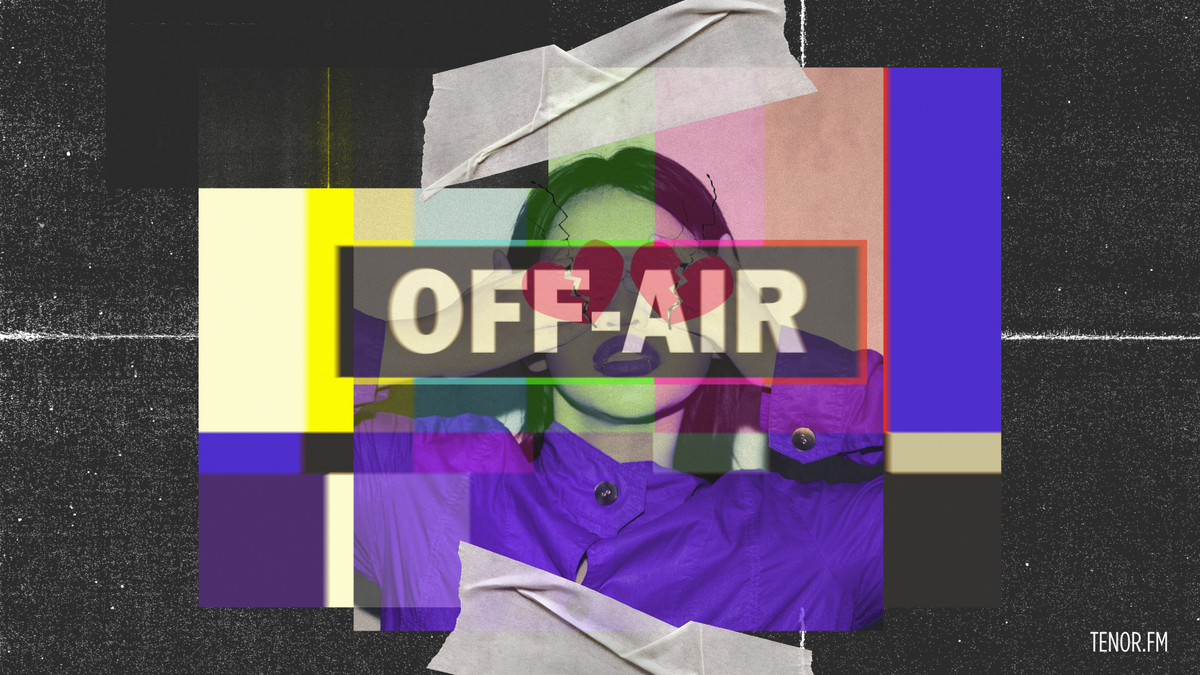
Transmission 3: Dead Air
Tenor. Signals Before Surface. Pattern Recognition Dept. / Weekly Transmissions. Est. 2026
This is Tenor. Signals Before Surface. I'm Geoffrey Colon.
Every week, fifteen minutes to listen or read. One signal. Before it surfaces. A new episode and post every Sunday when you actually have time to read and listen to things deeply. Looking for slop? You have six other days of the week for that.
Here's how this works: I'm not going to tell you what already happened. You've got a dozen newsletters and podcasts for that. What I'm interested in is the thing underneath — the pattern that's forming before anyone's given it a name. All those videos with people talking trends and labeling them? Yeah, not this. That's just ear candy.
This is transmission three.
In transmission one I introduced the Attention Recession. The quiet collapse in the quality of engagement. In transmission two I mapped where it lands first. Digital advertising's mid-funnel. Media built on impressions. Creator economy infrastructure built for the wrong definition of audience value.
And at the end of that episode I said we needed to go upstream. To the root cause underneath all of it. The thing that explains why the recession is happening at all.
Today that's where we're going.
I want to talk about the end of broadcast. Not just as a media format, but as a paradigm. As an assumption about how communication works that has been so fundamental, for so long, that most of us don't even know we're operating inside it.
That assumption is breaking down. And the breakdown is happening faster than almost anyone in marketing, media, or technology is willing to say out loud. But I will.
Let's get into it.
THE SIGNAL
There's a specific sound a radio station makes when it goes off the air. Not the music fading. Not the sign-off. The sound after — when the carrier wave drops and all you get is static. White noise. The absence of signal. That sound has a name.
Broadcasters call it dead air.
We've been living inside dead air for longer than we've admitted.
THE SURFACE
In 2016, media companies pivoted to video. Not because audiences demanded it. Not because the content was better. Because Facebook inflated its video metrics — by a factor of between 150 and 900 percent, depending on which lawsuit you read — and newsrooms restructured their entire editorial operations around numbers that were fiction. Hundreds of journalists were laid off. Text operations were gutted. Video teams were built. And then, eighteen months later, when the numbers were revealed to be fabricated, there was no pivot back.
The newsrooms were already gone.
That's not a tech story. That's a transmission story. Signal was corrupted at the source, and the infrastructure rebuilt itself around the corruption before anyone caught it.
Here's what happened next. The platforms that replaced those newsrooms didn't just change distribution. They changed what a signal was supposed to do.
In the old model of broadcasting, print, even early web, a signal carried information from a sender to a receiver. The goal was clarity. Reach. Getting the thing across. The new model optimized for engagement. And engagement, it turned out, had a different physics than transmission. It didn't reward clarity. It rewarded activation: emotional response, outrage, novelty, confirmation of existing belief. You didn't need to transmit information. You needed to trigger a reaction.
We spent a decade calling this a content problem. Too much noise. Bad actors. Misinformation. And those things are real. But they're symptoms of a deeper shift: the infrastructure itself was no longer built to carry signal. It was built to amplify response. Dead air is preferable to that. Dead air at least tells you the transmission is over.
The people who noticed first weren't media critics. They were the people trying to make things. Musicians who released albums into silence and couldn't tell if anyone heard. Journalists who broke stories that moved nothing. Teachers who couldn't tell the difference between a student who understood and a student who'd learned to perform understanding for an algorithm.
Makers of every kind reporting the same thing: the signal is going out but there's no indication it's landing. We're transmitting into a void that gives back engagement metrics instead of comprehension.
That's new.
That's different from anything that came before. And we've been treating it
like a marketing problem when it's actually a physics problem. The medium no longer reliably moves meaning from one place to another.
THE SO WHAT
So what is ending?
Not content. There's more content than at any point in human history.
Not reach. The numbers are staggering. A mid-sized podcast reaches more people in a week than a major metropolitan newspaper reached in its heyday.
What's ending is the reasonable assumption that signal and reception are connected. That putting something into the world means something receives it. That the act of transmission carries the possibility of landing. That assumption is what every creative and communicative act was built on. It's what justified the effort of making things carefully. If signal could land, precision mattered. Craft mattered. Truth mattered. When signal and reception decouple, when you can have enormous reach with zero landing, something fundamental breaks.
And what breaks isn't just trust in media. It's the epistemic contract that made shared reality possible.
I've been circling this episode as a highlight on the calendar because I think we keep treating all of this as a distribution problem or a business model problem.
And it's neither. It's a transmission problem.
The infrastructure we built to carry signal: social platforms, recommendation algorithms, engagement-optimized feeds, is optimized for something other than meaning. And the response to that can't be simply better content. Can't be more authentic storytelling. Can't be find your niche and serve it deeply, though that advice isn't wrong. The response has to be: rebuild transmission infrastructure that's actually designed to carry signal. Which means smaller. Which means slower. More intentional. Direct. Not because that's nostalgic. Because that's what physics requires.
CLOSE
Okay. That's Transmission Three.
Every transmission technology in history eventually produced a counter-movement toward smaller, more intentional infrastructure.
Broadcast gave way to cable. Cable gave way to streaming. Streaming is giving way to — something to be determined. We're in the middle of watching it happen. The people building that something are not building it in public yet. They're in newsletters and small podcasts and paid communities and Discord servers and local low transmission radio stations and zines. They're rebuilding the infrastructure of meaning at human scale. That's not a trend. It is transmission physics reasserting itself.
Dead air is not the end of broadcasting. It's the signal that the frequency is about to change.
On the next episode, we'll talk about what it looks like to transmit in close range. To build signal infrastructure so small and so intentional that reception is nearly guaranteed. What it means to be heard by fewer people and actually land. The signal model. Depth over reach. Resonance over impressions. Ten thousand people who are actually there over a million who technically showed up but really aren't paying attention.
I want to be clear about something before we close. I'm not saying broadcast is dead in the sense that it stops existing. Television still exists. Radio still exists. You can still buy a full-page ad and have a lot of people see it. We still put up billboards and measure them based on estimated impressions or through share of search probabilities. What I'm saying is that broadcast is no longer the organizing logic of communication. It's no longer the architecture everything else is built around. It's one tool in a much more complex environment. Unfortunately a diminishing one.
The question for next week is: if the signal model is what's replacing broadcast, what does it take to actually build one? Not theoretically. Specifically. What are the decisions, the trade-offs, the organizational changes, that allow a brand, a creator, a media company to move from broadcast logic to signal logic?
That's next week.
If this was worth your fifteen minutes of focused time, and if you actually learned something and listened all the way through, not passively, but for real, do me a solid and send it to one person who's trying to figure out what's changing and why. That's how signals grow to the surface.
This is Tenor. I'm Geoffrey Colon. We'll catch you next week.
 Geoffrey Colon
One more thing.
This episode is brought to you by Giide. And if you've been listening to what I just spent fifteen minutes talking about — the collapse of broadcast, the rise of depth over reach, the structural shift toward direct audience relationships — Giide is one of the most interesting things I've seen being built right now in that direction.
It's an interactive audio platform that puts you in direct contact with your audience. No algorithm deciding whether you get seen today. No feed. No middleman. You publish audio, you attach context — links, resources, visuals — and it goes straight to the people who actually want it. And you get real engagement data back. Not download counts. Actual interaction.
That's signal infrastructure. In a world that's still mostly running on broadcast logic.
Check it out at giide.com. G-I-I-D-E dot com.
Alright, that's it. See you next week.
Tenor is produced in Los Angeles by Feelr Media. New transmissions every Sunday in your inbox or at Tenor.FM.
Tenor. Signals Before Surface.